

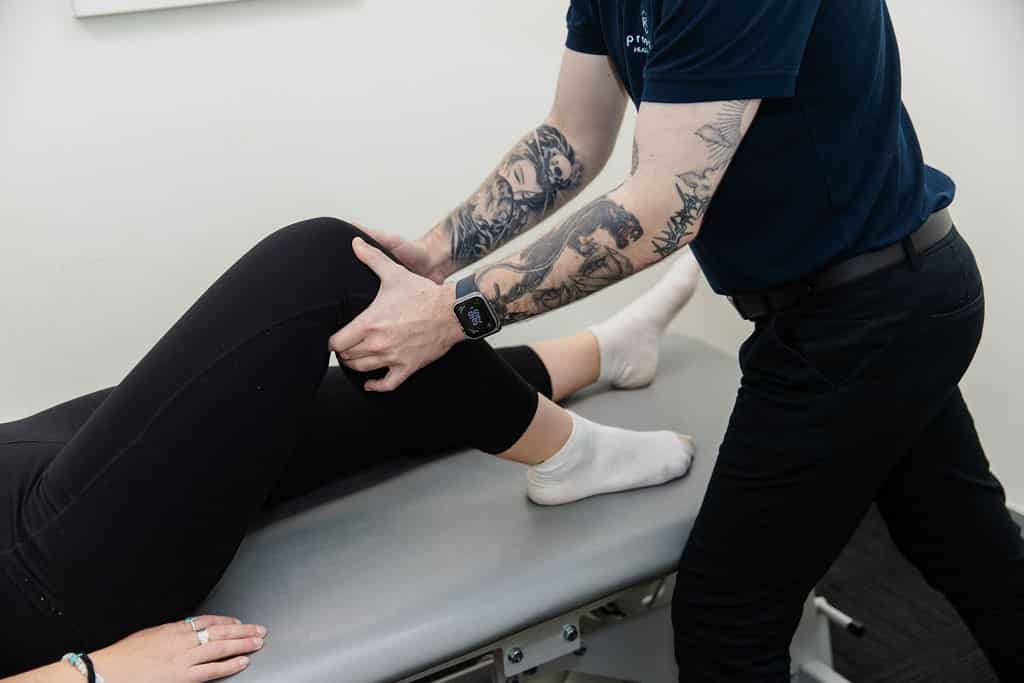
Meniscus tears are one of the most common injuries that can occur to the knee. Typically, athletes involved in contact sports are at the highest risk of a meniscus tear, however, it can also impact anyone at any age.
What is the meniscus?
The meniscus is made up of two C-shaped pieces of cartilage that sit in between the thigh bone (femur) and shin bone (tibia). The meniscus functions as a shock absorber for your knee joint and also helps with providing stability and lubrication to the joint.
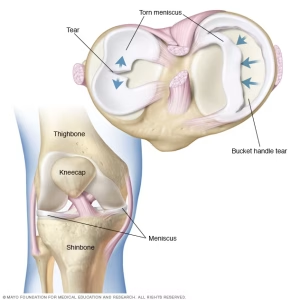
How is the meniscus injured?
A meniscus tear can occur in an acute or chronic scenario.
Acute tear
- Typically occurs as a result of trauma or a sports injury
- In sports this is often due to aggressive pivoting or sudden stops and turns
- Most common mechanism of injury is a twisting movement on a semi-flexed knee while the foot is planted
- Other mechanisms of injury can include kneeling, deep squatting or heavy lifting
Chronic tear / degenerative tear
- Most often occurs in older adults
- Involve minimal or no trauma
- The meniscal tissue has deteriorated to a degree (which is a normal aging process)
- Can occur early in life (e.g. in young athletes), but usually occurs in the fourth or fifth decade of life
What are the symptoms of a meniscus tear?
- Popping sensation (at time of injury)
- Pain – especially when twisting/rotating the knee
- Stiffness and/or swelling
- Loss of range of motion in the knee
- Catching or locking of the knee
- Feeling of the knee giving way
How is a meniscus tear diagnosed?
Your doctor or therapist may suspect you have a meniscus injury based on your description of the injury and how your symptoms are presenting. A physical examination will typically follow and may consist of:
- Range of motion testing
- Strength testing
- Walking analysis
- Specific testing used to diagnosed meniscus injury and rule out other injuries
A physiotherapist can provide the physical assessments during your first appointment. If there is any uncertainty or to clear any further damage to the knee joint, you may be referred on for imaging which may include:
- X-ray
- MRI
What are the treatment options for a meniscus tear?
Treatment options can include surgical and non-surgical management. This choice will be based on multiple factors such as your age, symptoms, size/location of tear and activity levels.
Non-surgical management
- RICE – rest, ice, elevation, compression
- Cryotherapy (ice application)
- Manual therapy – joint mobilisation or soft tissue massage
- Strengthening and stretching exercises – for the quadriceps and hamstring muscles in particular
- Balance training
- Graded return to activities
Surgical management
If your symptoms persist with non-surgical management, or your symptoms or tear size/location indicates it, you may require surgical intervention. Surgical intervention can include the following procedures:
Knee arthroscopy
- One of the most commonly performed surgical procedures
- Surgeon inserts miniature camera through a small incision in the knee
- Allows viewing of the inside of the knee and the meniscus
- Surgical instruments are inserted through additional incisions to trim or repair the tear
Partial meniscectomy
- Damaged meniscus tissue is trimmed and removed
- Procedure typically allows immediate weight bearing and full range of motion soon after
Meniscus repair
- Some tears can be repaired by stitching the tear back together
- This is dependent on the type of tear and condition of the overall meniscus
- As the meniscus must heal back together again, recovery time for this procedure is longer than meniscectomy
Following surgical treatment your surgeon will likely refer you on to a therapist such as a physiotherapist for rehabilitation. This will involve exercises to improve your range of motion and strength and help you return to full knee function.
It’s important to know that some people can have fantastic outcomes with conservative treatment such as a strength and conditioning program with a physiotherapist, while others will do better with surgical management. One of the best ways to test and understand how your body will respond is to undergo a strength and conditioning program with a physiotherapist first. This will give you the information you will need to make an informed decision about surgical management if it is still a required consideration at that point.
What do I do now?
If this sounds like an injury you received recently or even a long standing issue you’ve been managing with your knee, get in touch with a therapist experienced in managing meniscus tears.
You can book an appointment with a member of our practitioner team HERE
LINK: https://www.proactivehm.com.au/book-online/
Resources:
- https://www.physio-pedia.com/Meniscal_Lesions#contents
- https://orthoinfo.aaos.org/en/diseases–conditions/meniscus-tears/
- https://www.mayoclinic.org/diseases-conditions/torn-meniscus/symptoms-causes/syc-20354818
Written By:
Jacob Loader
Physiotherapist

